

07. Human Rights as a separate subject in schools

Image

Overview

Objectives

  1. Develop students' ability to understand and discuss the importance of human rights in contemporary society and education.
  2. Raise awareness about the role and significance of human rights in education.
  3. Develop students' debating and public speaking skills.
  4. Encourage and develop critical thinking and argumentation through the use of a teaching debate format/debate method.
  5. Introduce students to international documents that regulate human rights, such as, for example, the Universal Declaration of Human Rights or the Convention on Human Rights.
  6. Give students a sense of the challenges schools might face when introducing human rights as a subject; also, help students see how learning about human rights can affect their relationships with others

Level

Тhe level of difficulty can be rated as Level 2. This indicates a moderate difficulty level, appropriate for high school students (ages 15–18). It requires critical thinking, preparation of arguments, public speaking, and ability to engage in research work in pairs. Students will need to be familiar with basic debate skills, but the task can be adapted to higher levels as well.

Learning Outcomes

Students will:

  • Understand the basic principles of human rights and why they are so important to everyone.
  • Be able to discuss and justify views on the significance of human rights in the school context.
  • Learn how to present and support their views.
  • How to argue your point, present ideas, and speak confidently in front of others.
  • How human rights education can help build democratic values and principles.
  • How to work together as a team (in pairs) to research and present information.
  • Develop research skills, public speaking skills, as well as abilities to work in pairs.
  • Become familiar with international documents that regulate human rights, such as, for example, the Universal Declaration of Human Rights or the Convention on Human Rights.

Materials and Tools

  • Whiteboard and markers, paper and pencils, computers/smartphones for research
  • Presentation, digital materials, or documents with basic information about human rights – excerpts from human rights documents – the Universal Declaration of Human Rights or the Convention on Human Rights.
  • Stopwatch for timing speeches
  • Appendix 1 – Rule sheets for pair work
  • Appendix 2 – List of 12 debate questions
  • Appendix 3 – Layout of a comparison T table on the flip chart
  • Appendix 4 – Self – evaluation sheets
  • Appendix 5 – Argument cards for homework

Lesson plan

1. Introduction (10 minutes)

  • The teacher introduces the topic and goals of the lesson; 
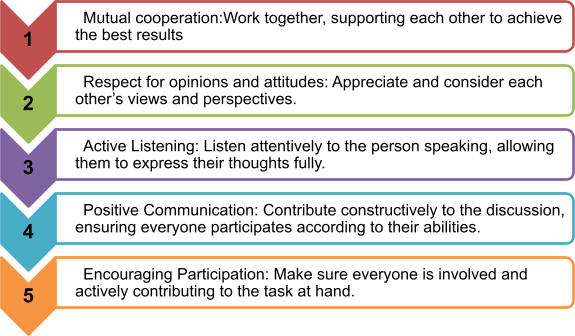
  • Establishing the rules of work (mutual cooperation in working in pairs, mutual respect of opinions and attitudes, we listen to the one who speaks, positive communication contribution in work – so that everyone is active in relation to their capabilities).
  • Students are reminded to use human rights knowledge they have gained during the two weeks of research and class preparation.
  • The teacher invites students to exchange ideas and attitudes about the materials they will use during work and to prepare to present their findings to the class.
  • Divide students into pairs – pair up the students and give each pair at least one research question .
  • Each pair receives a worksheet with research tasks with one of the 12 debate questions.

2.  Research time (20 minutes)

  • In pairs, students will dive into their assigned questions and start their research – they use computers/smartphones for research, also they use the materials they have prepared themselves through a two-week research at home.
  • Students use materials provided by the teacher, as well as those they have researched and prepared one to two weeks prior to the lesson, according to the teacher's assignments and instructions.
  • Students prepare considering their arguments and counterarguments to present their case for one minute, a total of two per pair. 
  • The teacher incourages them to take notes and be ready to clearly explain their answers in front of the class.

3. Presentations (35 minutes)

  • Each pair will take turns presenting their conclusions to the class. 
  • They’ll have 2 minutes to share what they found, followed by a short comment or question from teacher only if necessary. 
  • This is a great opportunity to hear different opinions from all students in class who will present the most important facts related to the topic.
  • Time is set in advance for each speech and should be strictly adhered to, so that all students have the opportunity to present their cases.
  • The teacher is a time keeper and makes sure that the presenting students do not exceed the time limit; at the same time, he measures the time and signals when the students should finish the presentation.

4. Open Discussion (15 minutes) 

  • After the presentations, teacher opens the floor for a discussion on the main points that came up. 
  • At the class level – a brief reflection on the presentation, posing several questions to the some speakers; students - evaluate/discuss what they have learned during the presentations and whether and how their views have changed.
  • At the end of the short discussion, it is necessary to summarize key conclusions and conclude with a reflection on why human rights education is so important.
  • According to that the teacher clearly presents the thesis - "It is necessary to introduce the subject of Human Rights in schools". 
  • He asks the students to determine whether they confirm or deny the thesis and to briefly state the arguments for the selected position, which he writes on the flip chart in the T table (FOR or AGAINST) 

4. Assessment (10 minutes)


Evaluating the speakers and their arguments; Summarize or overview of the strongest arguments is made, and conclusions are drawn about the significance of possibly introducing the subject of Human Rights (as a school subject).
Additional information

Tips and tricks

  • Allow students to prepare a week or two weeks before the lesson by giving them basic information about human rights, or research tasks based on which they will prepare two-minute speeches, both affirmative and negative, regarding the topic of introducing the Human Rights subject in school.
  • Give them clear instructions on what is expected so you will have well-prepared speakers and excellent judges. This way, you can also have a project-based research task that could last longer and culminate in the debate.
  • Clearly present the thesis – "The introduction of the Human Rights subject in schools is necessary." Ask them for homework to prepare arguments for and against the thesis, and for each student to prepare two speeches – one FOR and one AGAINST, each lasting two minutes.
  • Adapt the content to the needs, abilities, and interests of the class.
  • Monitor and ensure that all team members are actively involved in the debate, with a clear role; also, make sure that all of the class are actively participating in pair work – prepare evaluation sheets with criteria for assessing the speakers, their arguments, and presentations.
  • The lesson plan can be adjusted for 45 minutes if the number of students is fewer than 20 and if the research is conducted two weeks in advance.
  • Literature- https://www.azoo.hr/app/uploads/uvezeno/images/razno/I.Lukic.pdf

Materials

Appendix 1: Rules Sheet Rules for Working in Pairs

Appendix 2: Questions

Facilitate a brief 2-minute explanation of the significance of human rights through working ih pairs; each student from pair have one minute to speak, to present what have prepared by researching. 

  1. What are human rights, and why are they important for individuals in society? 
  2. How can learning about human rights impact students’ daily lives and the way they relate to others? 
  3. How do you think understanding human rights can help reduce discrimination and intolerance in schools? 
  4. What challenges do schools face when introducing human rights as a subject? What risks are there in teaching younger students about it? Could it be too complex for them? 
  5. Do you believe everyone, no matter their background, should have the same rights? Why or why not? Can you give an example? 
  6. How can understanding human rights help someone become an active citizen in a democratic society? Which human right do you think is the most important, and why? 
  7. How can human rights education help solve social issues like inequality and injustice? Give an example to support your view. 
  8. Do you think it’s important for students to learn about global human rights standards, like those set by the United Nations? Why? 
  9. How can human rights education in schools encourage a sense of responsibility toward others and society? How can it help create a more respectful, tolerant community? 
  10. Do you think learning about human rights can prepare students for real-world challenges? Can you share an example? 
  11. Why do some people argue that teaching human rights in schools isn’t necessary? What are their concerns? 
  12. How can schools handle different opinions on human rights to make sure the education is fair and neutral?

*These questions are designed to provoke critical thinking and elicit clear, concise responses that demonstrate the importance of human rights in society, both from a positive and critical perspective.

Appendix 3: Layout of a comparison T table on the flip chart

It is necessary to introduce the subject of Human Rights in schools.

FOR

AGAINST

Appendix 4: Self-evaluation sheets

This sheet allows presenters to evaluate themselves based on key criteria and provide an overall rating based on their performance. This self-evaluation allows students to reflect on their individual contribution, teamwork, and presentation skills. It also encourages them to assess their learning and identify areas for improvement.

Instructions for the Self-evaluation:

  1. Evaluate yourself in each criterion by giving points from 0 to 2.

Rating Scale:

  • 0 points: Needs improvement, very poor
  • 1 point: Satisfactory, needs improvement
  • 2 points: Strong, excellent performance

  1. Sum up the total points for each criterion.
  2. Convert the total points into an overall rating using the following scale: 
  • 0-3 points: Rating 1 (Very Poor)
  • 4-6 points: Rating 2 (Poor)
  • 7-9 points: Rating 3 (Good)
  • 10-12 points: Rating 4 (Very Good)
  • 13-14 points: Rating 5 (Excellent)

Overall Rating (1-5):

  • 1: Very Poor
  • 2: Poor
  • 3: Adequate
  • 4: Good
  • 5: Excellent
  1. Write reflection

Self-Evaluation Sheet for students who worked on graphic organizers in pairs and then presented their conclusions to the class:

REFLECTION

1. What did I learn from this activity?

(Write a brief reflection on what you learned from working on the graphic organizer and presenting.)

______________________________________________________________________

2. What I found challenging?

(Write a brief reflection on any challenges you faced during the task or presentation.)

______________________________________________________________________

3. What could I improve for the next time?

(Write a brief reflection on areas you think you could improve for future projects or presentations.)

______________________________________________________________________

Appendix 5: Argument cards for homework

Examples of Arguments FOR or AGAINST on Introducing Human Rights as a Subject in Schools that can help students with their homeworks

Lists of arguments*

Arguments of the Affirmative Team (FOR introducing human rights as a subject in schools)

  • Increased Awareness of Human Rights: Introducing a subject on human rights can help students better understand their own rights and responsibilities in society, as well as the rights of others. Throughout the school year, within the subject of Human Rights, they could learn about these rights, tolerance, and many examples, both historical and current. This would increase the levels of tolerance in society and respect for diversity.
  • Development of Critical Thinking: Students who learn about human rights in school through a dedicated subject develop critical thinking skills and are equipped to analyze social relationships and problems. This prepares them for an active role in society and helps them understand the significance of human rights for each individual, as well as the importance of justice and equality.
  • Prevention of Discrimination: If students understand the significance of human rights, they are less likely to engage in discrimination or bullying of others. This could improve the atmosphere in schools and society in general.
  • Achieving International Alignment: Introducing a subject on human rights in schools would help align with international standards, such as the Universal Human Rights recognized by the United Nations.
  • Fostering Active Civic Awareness: Students will be better prepared for life in a democratic society if they understand the importance of human rights. This encourages them to be responsible citizens who know how to fight for their own rights and the rights of others.

Arguments of the Negative Team (AGAINST introducing human rights as a subject in schools)

  • Lack of Resources and Capacity: Introducing a new subject requires additional resources, such as qualified teachers with expertise, textbooks, and various materials. Many schools already face financial difficulties and challenges in offering other subjects, so an additional subject would become a burden.
  • Increased Student Workload: Students already have a large number of subjects, and adding another subject would further burden them, ultimately reducing the quality of education in other areas.
  • Irrelevance to Younger Age Groups: Human rights are a complex topic and difficult to address at early levels of education. Younger students may struggle to understand deep legal and social concepts related to human rights. This could do more harm than good.
  • Ideological Bias: Introducing a subject on human rights in different countries could be subject to ideological biases. Different political or religious groups, even within a single country, may have different interpretations of human rights, leading to controversies and unequal approaches in designing curriculum plans and the learning process itself.
  • Social Context and Reality: Introducing a subject focused solely on human rights might be ineffective in countries or societies where human rights are not fully respected. Instead of focusing on the theory of human rights, students should have a practical approach to solving real and current social issues.

*These lists of arguments are meant to help students prepare for the debate on the mentioned topic if the teacher deems it necessary. Of course, students can independently formulate their own arguments based on their research and approach to the topic or add to and adjust the given arguments.

Here is how the Argument Cards can be presented in the format of thesis, argument name, and

explanation of the argument for both teams:

Affirmative Team (FOR introducing human rights as a subject in schools)

Argument Card 1: Increases Awareness of Human Rights

Thesis: Human rights education raises awareness and understanding of fundamental rights.

Argument Name: Raising Awareness

Explanation: Introducing a human rights subject helps students understand their own rights and the rights of others, fostering tolerance and respect for diversity in society. It allows students to learn from historical and current examples of human rights issues, promoting a more empathetic and socially aware generation.

Argument Card 2: Develops Critical Thinking

Thesis: A dedicated human rights subject enhances critical thinking and societal engagement.

Argument Name: Developing Critical Thinking

Explanation: Through learning about human rights, students develop critical thinking skills.

They learn to analyze social relations and complex issues such as justice, equality, and individual freedoms, which prepares them for active participation in society and the ability to challenge inequality.

Argument Card 3: Encourages Prevention of Discrimination

Thesis: Education on human rights can reduce discrimination and promote inclusion.

Argument Name: Preventing Discrimination

Explanation: By understanding the significance of human rights, students are less likely to engage in discriminatory behavior. This can foster a more inclusive and supportive school environment and reduce bullying, contributing to a more harmonious society.

Argument Card 4: Achieves International Alignment

Thesis: Teaching human rights in schools aligns with international human rights standards.

Argument Name: Global Alignment

Explanation: A human rights subject would align with the Universal Declaration of Human Rights, recognized by the United Nations. This allows students to become aware of international human rights norms and standards, promoting a global understanding of justice and equality.

Argument Card 5: Develops Active Citizenship

Thesis: Understanding human rights equips students to become responsible citizens.

Argument Name: Fostering Active Citizenship

Explanation: Teaching students about human rights encourages them to engage actively in society. They will understand how to advocate for their own rights and the rights of others, contributing to the development of responsible and socially aware citizens in a democratic society.

Negative Team (AGAINST introducing human rights as a subject in schools)

Argument Card 1: Lack of Resources and Capacity

Thesis: Introducing a new subject requires significant resources and capacity, which many schools lack.

Argument Name: Resource Limitations

Explanation: Implementing a new subject requires qualified teachers, textbooks, and other resources that many schools already struggle to provide. Given the financial challenges many schools face, introducing another subject could add to the burden and further strain limited resources.

Argument Card 2: Increased Student Workload

Thesis: Adding another subject to the curriculum burdens students and reduces educational quality.

Argument Name: Increased Workload

Explanation: Students already face a heavy workload, and adding a new subject could lead to burnout and fatigue. This could impact the quality of education in other subjects, as teachers would have to divide their attention and time between more topics, potentially reducing students' overall performance.

Argument Card 3: Irrelevance to Younger Age Groups

Thesis: The topic of human rights is too complex for younger students to comprehend effectively.

Argument Name: Age-Inappropriate Content

Explanation: Human rights is a complex subject that involves deep legal and social concepts that may be difficult for younger students to grasp. Introducing such a subject at early stages of education could result in confusion, misunderstanding, and potentially even a lack of interest in the subject.

Argument Card 4: Ideological Bias

Thesis: The teaching of human rights may be biased and vary according to ideological perspectives.

Argument Name: Ideological Bias

Explanation: Different political, cultural, and religious groups may interpret human rights differently, leading to potential biases in teaching. This could result in controversies and inconsistency in the curriculum, affecting the quality and neutrality of education in human rights.

Argument Card 5: Social Context and Reality

Thesis: Teaching human rights may be ineffective in contexts where human rights are not fully respected.

Argument Name: Practical Relevance

Explanation: In countries or communities where human rights are not fully implemented or respected, theoretical education on human rights might feel disconnected from students' lived experiences. Instead, students may benefit more from practical approaches that address current social problems directly, rather than theoretical lessons that are not immediately applicable to their environment.

Course Information

Icon

Type

Topical debate lesson

Icon

Theme

Understanding human rights

Icon

Level

Intermediate

Icon

Duration

90 minutes

Icon

Students

24 students (up to 30 students)

Download lesson

IconIcon